Douglaston Locksmith Service Team
Local locksmith team
Sep 11, 2026 11 min read
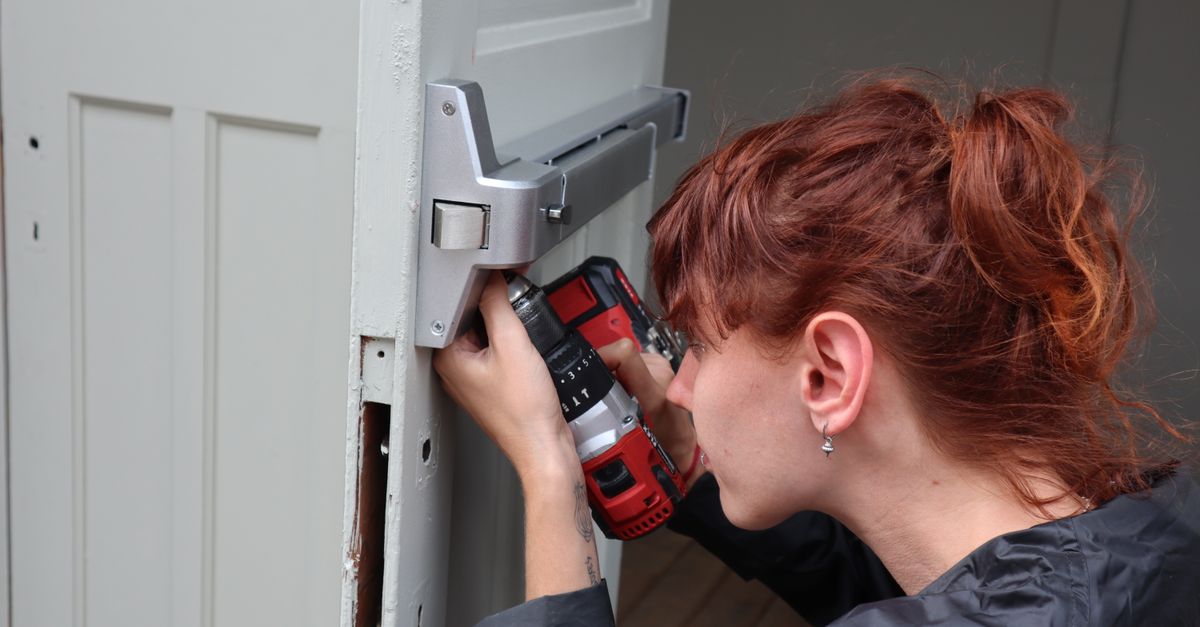
If you've ever pushed your front door shut and heard that familiar non-click — the latch sliding past the strike plate without catching — you know the low-grade anxiety it creates. Maybe it happens every summer when the humidity climbs, or maybe the problem started the day after a delivery driver bumped the door frame. Either way, a door that won't latch is more than an annoyance: it's a security gap. In Douglaston, where older Tudor and Colonial-style homes along the North Shore sit on lots that see real seasonal weather shifts, latch problems are one of the most common calls we receive.
This guide walks you through the real reasons a door refuses to latch, what you can fix yourself with basic tools, what calls for a locksmith — particularly if you have a mortise latch and lock or a rim night latch setup — and when a carpenter is actually the right answer. By the end, you'll know exactly what's wrong with your door and who to call to fix it properly.
## Why Douglaston Doors Stop Latching: The Usual Suspects
The first step is diagnosing the cause, because the fix depends entirely on it. The four most common culprits are: seasonal wood movement, a misaligned strike plate, a worn or faulty latch mechanism itself, and hinge sag. Douglaston sits along Little Neck Bay, and the neighborhood's proximity to the water means humidity swings are real and significant. Wood door frames and door slabs absorb moisture in summer, swelling outward — sometimes just enough that the latch bolt no longer lines up with the strike plate hole. Come winter, the wood contracts again and the door may swing freely but rattle in the frame.
Hinge sag is the second major cause, especially in older homes on Douglaston Parkway or the side streets off Manor Road where solid wood doors have been in place for decades. When the top hinge loosens, the door drops slightly on the latch side, and the latch bolt ends up striking the lip of the strike plate rather than dropping cleanly into the recess. A quick look at the edge of your door near the latch will tell you a lot: if you see bright, shiny wear marks on the metal strike plate, the latch bolt is dragging against the wrong surface.
## Mortise Lock Problems: When the Issue Is Inside the Door
Many Douglaston homes — particularly those built between the 1920s and 1960s — were fitted with mortise latch and lock hardware. A mortise lock is a self-contained unit that sits inside a pocket (the mortise) cut into the edge of the door. It combines the latch bolt, the deadbolt, and sometimes the knob mechanism all in one case. This design is robust and long-lasting, but when it fails, it fails internally — and a standard tube latch replacement from a hardware store won't fix it.
Inside a mortise lock, a spring-loaded cam drives the latch bolt forward. Over years of use, that spring weakens, the cam wears, or the case itself cracks. The symptom: the latch bolt extends sluggishly, retracts stiffly, or doesn't spring back at all after you turn the knob. If your door knob lock turns but the latch doesn't move — or moves only part of the way — the mortise case likely needs servicing or replacement. This is not a DIY repair. A skilled locksmith can pull the mortise unit, assess whether it can be rebuilt, and source a matching replacement if needed — preserving the existing door prep rather than requiring new drilling or routing. If you're in this situation, call 718-521-4103 and we can assess it same-day.
## Rim Night Latch and Cylinder Locks: Surface-Mounted and Surprisingly Fussy
Not every Douglaston door uses a mortise lock or a standard cylindrical knob set. Some exterior doors — particularly on older row-house additions, basement entries, and garage access doors — use a rim night latch lock, sometimes called a rim lock night latch or a cylinder rim night latch. This type of lock mounts on the surface of the door face rather than inside the door edge. The latch bolt shoots horizontally into a keep plate fixed to the door frame.
Rim night latch locks fail to latch for a specific set of reasons: the keep plate shifts (often because screws strip out of an aging frame), the latch bolt itself corrodes or loses its spring tension, or the door warps just enough that the bolt and the keep plate no longer share the same horizontal plane. Because the mechanism is surface-mounted, misalignment is visible — you can usually see daylight between the bolt and the keep with the door closed. A night latch deadbolt rim lock also adds a keyed deadbolt element to the equation, meaning a latch failure could also mean you're relying solely on a deadbolt to keep the door shut, with no secondary catch. If the latch fails on a rim lock setup, the door may appear closed but be completely unsecured. Don't leave it overnight — call 718-521-4103 for a same-day assessment.
## DIY Fixes Worth Trying — and Where to Stop
There are a handful of repairs that a careful homeowner can attempt before calling anyone. First, check and tighten all hinge screws. Use a screwdriver, not a power drill — overtightening strips the holes. If the screws spin freely, the holes are stripped; a wooden toothpick with wood glue packed into the hole and allowed to dry overnight will give the screw fresh material to bite into. Second, look at where the latch bolt meets the strike plate. If the bolt is hitting high or low by just a few millimeters, you may be able to file the strike plate opening slightly with a metal file to enlarge the recess in the right direction — no new holes, no new hardware needed.
What you should not attempt yourself: adjusting or disassembling a mortise latch and lock, respringing a rim night latch mechanism, or shimming hinges if the door frame itself is out of plumb. These repairs require tools and calibration that go beyond a basic toolkit. Equally important — if you find yourself locked out because the latch has jammed in the closed position, do not attempt to force the latch or manipulate the lock mechanism yourself. Check for an unlocked window (ground level, accessible from outside your property), a rear or side door, or a trusted neighbor who holds a spare key. If none of those options work, that's an emergency locksmith call, not a pry-bar moment. Our team handles exactly this scenario regularly — we verify ownership on-site and get you back inside without damaging your door or frame.
## Locksmith vs. Carpenter: Making the Right Call
This is the question we get asked most often, and the honest answer is: it depends on where the problem lives. If the latch, the lock case, the strike plate, or the cylinder is the source of the failure — call a locksmith. A qualified locksmith handles mortise lock repair and replacement, strike plate repositioning, door knob lock servicing, rim night latch adjustment, and emergency locksmith response when a jammed latch leaves you shut out. These are hardware and mechanism problems that require locksmith tools and expertise.
If the door frame is rotted, the door slab has warped beyond adjustment, or the rough opening has shifted significantly — that's carpenter territory. In practice, the most efficient route is to call a locksmith first. We can quickly identify whether the problem is mechanical or structural. If it's structural, we'll tell you plainly that a carpenter is what you need. If it's both — a warped frame and a worn mortise lock — we handle the lock side and give you clear guidance on the frame work, so you're not paying two trades to diagnose the same door. Our team also provides commercial locksmith services for Douglaston businesses on Northern Boulevard and in the Little Neck area, so whether it's a storefront door or a residential entry, we've seen the full range of latch failures this neighborhood produces. For any latch problem you can't resolve with a screwdriver and five minutes, call 718-521-4103 — we're available 24 hours a day, 7 days a week, including weekends and holidays.
## Services We Provide in Douglaston, NY
Our mobile locksmith team covers Douglaston and the surrounding Queens neighborhoods with a full range of residential, commercial, and automotive services. Here is what we handle: mortise lock repair and replacement, mortise latch and lock rekeying, rim night latch lock adjustment and replacement, cylinder rim night latch installation, door knob lock repair and replacement, deadbolt installation and repair, night latch deadbolt rim lock servicing, strike plate realignment and reinforcement, emergency locksmith response for residential lockouts, house lockout assistance with on-site ownership verification, key duplication and key cutting, master key system setup, high-security lock upgrades, smart lock and keypad lock installation, lock rekeying after a move or break-in, mailbox lock replacement, sliding door lock repair, garage door lock service, commercial locksmith services for storefronts and offices, commercial door closer and latch adjustment, access control system installation, car lockout service, automotive key programming, transponder key cutting, broken key extraction from locks and ignitions, and safe opening and combination changes. Pricing for any service depends on the lock type and complexity, the time of day, travel to your location, and any parts required — we confirm an exact price up front before any work begins.
## What to Do If a Latch Failure Locks You Out
A latch that jams in the extended position — stuck forward and unable to retract — is one of the most disorienting lockout scenarios because the door looks fine from the outside. You may still have your keys in hand, but no amount of turning will open the door because the latch itself is mechanically seized. If you find yourself wondering what to do when you're locked out of your house in this situation, the steps are straightforward: stay calm, check every other point of entry (back door, ground-floor window you know is unlocked, attached garage), call a household member or trusted neighbor who may have a copy of your key, and if none of that works, call a professional.
Attempting to force a seized latch by pushing or pulling the door hard is the fastest way to crack an older wooden frame or damage the latch case beyond repair — turning a simple service call into a full door replacement. Our emergency locksmith team carries the tools to diagnose and release a seized mortise latch or rim night latch without destroying the hardware. We work on doors in Douglaston from the manor-style homes near Douglas Manor to the more modest Cape Cods off Alley Pond — every door type, every lock generation. Call 718-521-4103 any time, day or night, and we will be on our way.
Frequently asked questions
My door knob turns but the latch doesn't move — what's wrong?+
This is almost always an internal mechanism failure. On a standard cylindrical lock, the spindle connecting the knob to the latch bolt has likely sheared or slipped — a straightforward part replacement. On a mortise latch and lock, the cam or follower inside the mortise case has worn or broken. Either way, the fix requires accessing the internal components of the lock, which means removing the knob set or pulling the mortise unit. A locksmith can assess which type of lock you have and replace or repair the correct component without damaging the door.
What to do when you're locked out of your house because the latch is stuck?+
First, check all other entry points — rear door, unlocked ground-level window accessible from your own property, or a neighbor with a spare key. If those options are exhausted, call a professional locksmith. Do not attempt to force the latch with a card, a tool, or by pushing the door hard — a jammed latch is usually a mechanical failure that force will make worse, not better. Our team handles exactly this scenario with the right tools to free a seized latch while preserving the door and frame. Call 718-521-4103 anytime — we answer 24 hours a day.
How much does it cost to fix a latch or mortise lock in Douglaston?+
The final price depends on several factors: the type of lock involved (a rim night latch lock is a different job from a full mortise latch and lock replacement), the extent of the damage or wear, whether parts need to be sourced, and the time of day you call. We assess the door and the hardware on-site and provide an exact up-front price before any work begins — no surprises after the fact.
Should I call a locksmith or a carpenter for a door that won't close right?+
Call a locksmith first. If the problem is in the latch mechanism, the strike plate, the lock case, or the hinge hardware — all things that directly affect whether the lock functions — a locksmith is the right trade. If the frame is structurally rotted, the door has warped severely, or the rough opening has shifted, a carpenter is also needed. In many cases it's both, and a locksmith can tell you quickly which side of that line your problem falls on. Our team handles the full mechanical side and will give you honest guidance if structural work is also required.